You post most days. You reply to comments, you share the occasional behind the scenes photo and you show up on the grid even when the diary is full. Every so often something lands, the notifications spike, and for a few hours it feels like the effort is paying off. Then the week ends, the calendar is still half empty, and you cannot trace a single paying client back to the hours you spent on social media.
That gap between attention and revenue is one of the most expensive problems in small business marketing. It is not caused by a lack of content. It is caused by a missing route between the two ends. Socials That Sell, the STS approach used by Dr. Sariki Abungwo and the team at Blesatech Consultancy Services, exists to build that route deliberately rather than hoping it appears.
Why Busy Feeds Do Not Automatically Create Clients
Engagement is a signal, not an outcome. A post that gets saved, shared and commented on has done its job as content, but content is only the top of a chain. Between a warm comment and a signed client there are several steps that most small businesses never design on purpose: an obvious next step, a way to capture interest, a conversation that qualifies the enquiry, and a diary that makes booking simple.
When those steps are missing, the same thing happens every time. Attention arrives, looks around, and leaves. The business owner concludes that social media does not work for their industry, when in reality the content worked and the plumbing did not. Coaches, consultants and service based owners feel this most sharply because their offer is a conversation, not a product on a shelf. If the route to that conversation is vague, the enquiry never happens.
What Socials That Sell Means in Practice
STS is not a posting schedule and it is not a trending audio strategy. It is a framework for turning social media attention into qualified enquiries, appointments and paying customers. The emphasis sits on the word qualified. A thousand passive followers are worth less than a handful of people who understand what you do, recognise that they need it, and know exactly how to start a conversation with you.
Practically, the framework asks four questions of every piece of content you publish. Who is this for? What should they do next? Where does their interest get captured? And what happens to them after they raise their hand? Content that answers all four behaves very differently from content that only answers the first.
The Four Stages of the STS Journey
Attention: content worth stopping for
Attention is the entry point, not the goal. It comes from content that speaks to a specific problem in specific language, which is why broad motivational posts rarely convert for service businesses. Images, short tutorials, live sessions and customer stories all earn attention, and the common thread is relevance rather than polish. A post that makes one ideal client think “that is exactly my situation” outperforms a slick post that everyone admires and nobody acts on.
Qualified enquiry: making the next step obvious
This is where most social media effort quietly dies. A viewer finishes reading, feels a flicker of interest, and then has to guess what to do about it. The fix is to remove the guessing entirely. Every post should carry one clear instruction, whether that is to comment a word, send a direct message, click a link or book a call. One instruction, repeated consistently, beats five competing calls to action.
Appointment: reducing friction between interest and diary
Interest has a short shelf life. If someone has to email you, wait for a reply, negotiate a time and remember to attend, you will lose a meaningful share of them along the way. Blesatech builds appointment booking into the client journey precisely because a live diary link converts curiosity faster than a conversation about availability. The smaller the gap between wanting to talk and having a time in the diary, the higher the share of enquiries that survive.
Paying client: follow up until the decision is made
Conversion rarely happens on first contact. A proportion of your enquiries will be interested but not ready, and those people need a route back into your world rather than a polite goodbye. Follow up sequences, reminders and re-engagement messages do the quiet work here. This is also where retention begins, because a client who feels looked after after the sale becomes the source of testimonials, referrals and repeat business that feed the top of the next cycle.
How STS Fits Inside Infinite Business Growth Systems
Socials That Sell is one component of the wider Infinite Business Growth Systems methodology, a six pillar approach built around a simple sequence: attract, convert, retain. STS sits mainly in the attract and convert stages, but it works best when the surrounding pillars are in place. The table below shows how the pillars line up.
| IBGS pillar | What it covers |
|---|---|
| Reliability | Dependable business foundations and processes behind the marketing |
| Reputation | Credibility, trust and authority built through visible proof |
| Readiness | Systems in place to capture, nurture and convert leads |
| Reach | Content and marketing that attract ideal prospects |
| Resell | Increasing customer lifetime value and repeat sales |
| Remarketing | Follow ups and automation that re-engage warm prospects |
Read against that structure, a social media problem is rarely just a content problem. Weak enquiry rates often point to a readiness gap. Poor close rates often point to a reputation gap. STS works because it treats the whole path as one system rather than blaming the posting schedule for everything downstream.
Five Social Selling Habits Worth Building
Common social selling guidance for small businesses keeps returning to the same handful of practical habits. They are unglamorous, they are repeatable, and they map neatly onto the STS stages.
- Sell through images and visual proof. Showing the work, the process and the result gives prospective clients something concrete to react to. Visual posts are frequently cited in social selling advice for exactly this reason: they make an abstract service feel real.
- Run regular live sessions or trainings. Weekly live content compresses the trust building process because viewers see your expertise rather than a description of it. It also creates a natural moment each week where people can ask questions and be invited to the next step.
- Schedule your content. Consistency is easier to maintain when publishing is not a daily decision made in a spare ten minutes. A planned schedule protects the reach pillar from the busiest weeks of the year.
- Share testimonials and reviews. Proof reduces perceived risk, and perceived risk is what stops a warm follower becoming a booked call. Client stories do double duty as content and as reputation building.
- Engage one to one. Direct messages, replies and genuine conversations convert attention in a way that broadcasting never will. This is where qualification happens and where the relationship that leads to a paying client actually forms.
Listening Is a Sales Skill
Businesses that are frequently held up as strong social media performers tend to share one trait: they listen. A well known example is Franktuary, a hot dog shop in Pittsburgh, which takes time to listen and engage with its audience on Facebook, Twitter, Instagram and its blog. Nothing about that approach is clever or technical. It is simply a business treating social media as a conversation rather than a noticeboard.
The same principle covers the content formats small businesses borrow and adapt, from user generated content and collaborative giveaways to short tutorials on platforms such as TikTok. Each works when it invites a response, and each falls flat when it is broadcast into silence. Listening tells you which questions your audience is already asking, and those questions are the raw material for content that converts.

Why Consistency Beats Volume
Inconsistency is the quiet killer of social selling. Two weeks of daily posting followed by a month of silence teaches the algorithm and your audience that you are unreliable, and it makes any enquiry route you built feel abandoned. A smaller, steadier output with a clear next step on every post will out perform sporadic bursts every time, because the system only compounds when it keeps running.
This matters most for service based businesses, where the buying cycle is longer than a single payday. A prospect may follow you for months before they need what you sell. The business that is still visible, still useful and still easy to contact at the moment of need is the one that gets the call.
Common Reasons Attention Stalls Before It Becomes Revenue
- No single, repeated call to action, so interested viewers have nothing obvious to do.
- Enquiries arrive in direct messages with no system for capturing or tracking them.
- Booking requires several messages back and forth, and interest cools in the delay.
- There is no follow up, so anyone who is interested but not yet ready simply disappears.
- Content speaks to everyone, which means it persuades no one in particular.
- Proof is missing, so warm prospects have no reason to believe the outcome is achievable for them.

Who Socials That Sell Is Built For
STS is designed for coaches, consultants, experts and service based small business owners who already have an audience or are building one, and who are tired of watching engagement fail to show up in the bank account. It suits people who want a repeatable route from post to appointment rather than a one off viral moment, and who are willing to change how they publish rather than simply publish more.
Delivery is flexible. Business owners who prefer to implement themselves can work through structured courses. Those who want guidance while they build can choose coaching and consulting support. Those who would rather hand the implementation over entirely can opt for a done for you build covering funnels, CRM setup, lead generation, marketing automation, appointment booking and retention.
Book a Call to Map Your Route From Attention to Clients
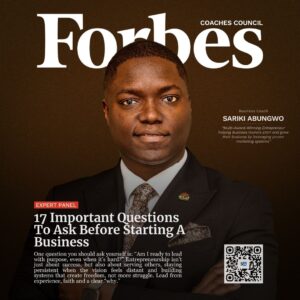
If your content is getting seen but your diary is not filling, the fastest way forward is a conversation about where the route breaks. Dr. Sariki Abungwo, founder and CEO of Blesatech Consultancy Services, is a UK based business growth strategist, international speaker and executive coach, a Fellow of the British Computer Society and a member of the Forbes Coaches Council. His work centres on replacing inconsistent marketing and unpredictable sales with systems that produce consistent, predictable and profitable growth.
Book a call and you will walk through your current social media activity, identify the stage where attention stops converting, and leave with a clear view of what to fix first. You do not need a bigger following to start. You need a route that works.
Frequently Asked Questions
How long does it take for social media to bring in paying clients?
There is no fixed timeline, because it depends on your audience size, your buying cycle and how quickly the enquiry route is fixed. What usually changes first is the number of qualified conversations, not the number of sales. Once the path from post to booked call is clear and consistent, enquiries tend to follow, and clients follow the enquiries.
Do I need to be active on every social platform?
No. Being present and consistent on one or two platforms where your ideal clients actually spend time will generally serve you better than spreading thin across five. Platforms commonly used by small businesses include Facebook, Instagram and TikTok, but the right choice depends on who you serve and where they already ask questions about your type of service.
What counts as a qualified enquiry?
A qualified enquiry comes from someone who fits your ideal client profile and has shown enough interest to take a deliberate step, such as sending a message, requesting a resource or booking a call. It is not the same as a like, a follow or a passing compliment. Qualification is what allows you to spend your time on conversations that can realistically become paying work.
Can I run Socials That Sell on a small budget?
Yes. Much of the framework relies on clear positioning, consistent publishing, a visible next step and a booking link rather than paid advertising. Budget helps with reach, but it cannot compensate for a missing route between attention and enquiry. Sorting out the route first means any money you do spend on promotion lands on a system that can actually convert it.
How is this different from hiring a social media manager?
A social media manager usually handles publishing, scheduling and community engagement. STS focuses on what happens around and after the post: capturing interest, qualifying enquiries, getting appointments booked and following up until a decision is made. The two can work well together, but the conversion architecture needs to exist before more content is poured into it.